

High-speed interconnect manufacturer WIESON Technologies Co., Ltd. (TWSE: 6272) officially announced today (November 27) the establishment of the "Wieson-Liturex Joint Laboratory of EM Simulation for High-Speed Optoelectronic Interconnects (W&L OptoLink Lab)" in partnership with Liturex, alongside the commercial launch of 400G, 800G, and 1.6T high-speed optical transceivers under its own WIESON brand. Co-developed by both parties, the OCTC-compliant 1.6T optical transceivers have entered mass production and delivery. Combining Liturex's optical transceiver design expertise with WIESON's 30 years of Signal Integrity (SI) and Electromagnetic Interference (EMI) engineering capabilities, WIESON delivers complete, integrated interconnect solutions for global AI servers and data centers.
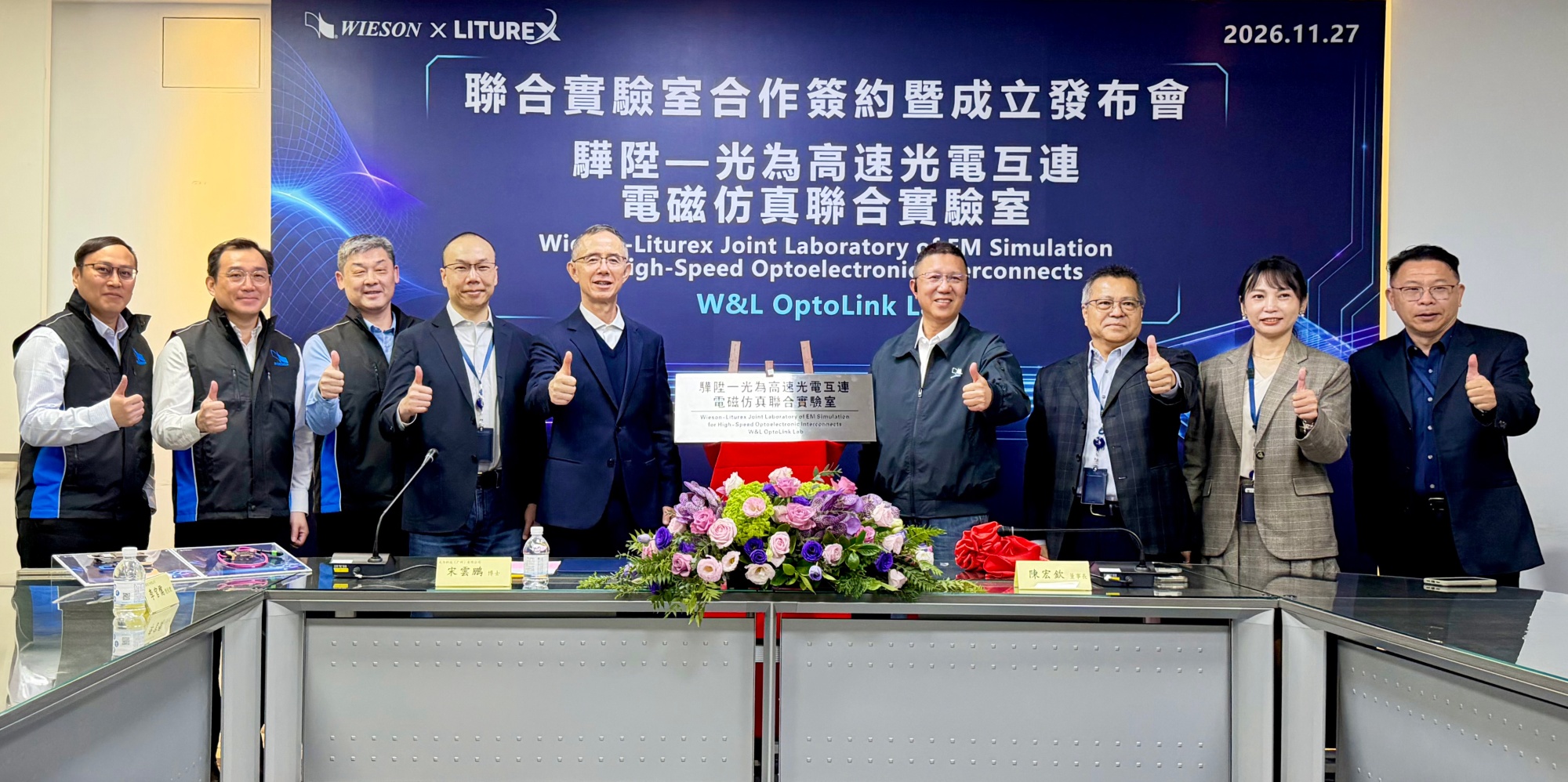
marking the official launch of the W&L OptoLink Lab.
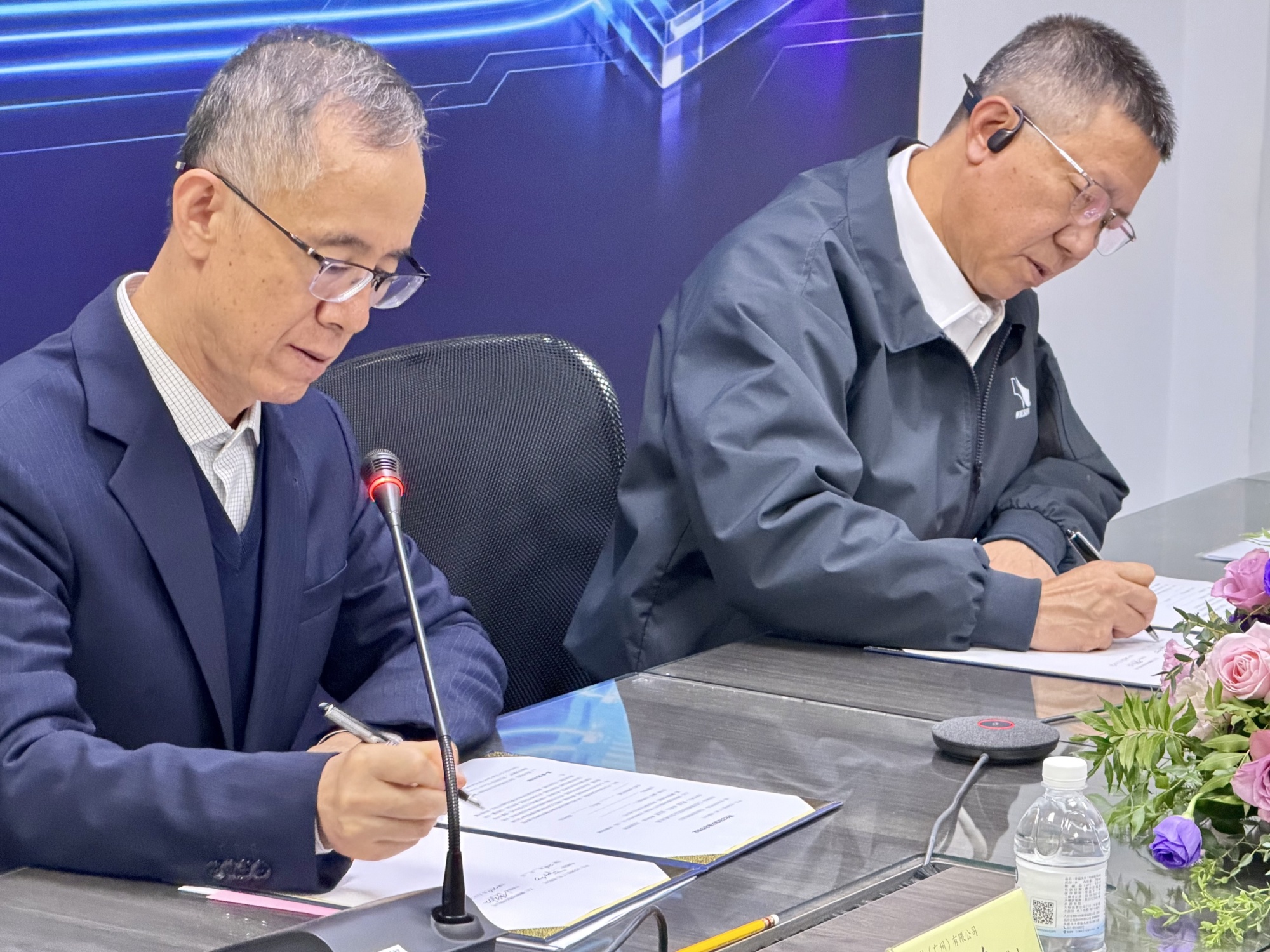
establishing joint transceiver R&D and EM simulation methodologies.
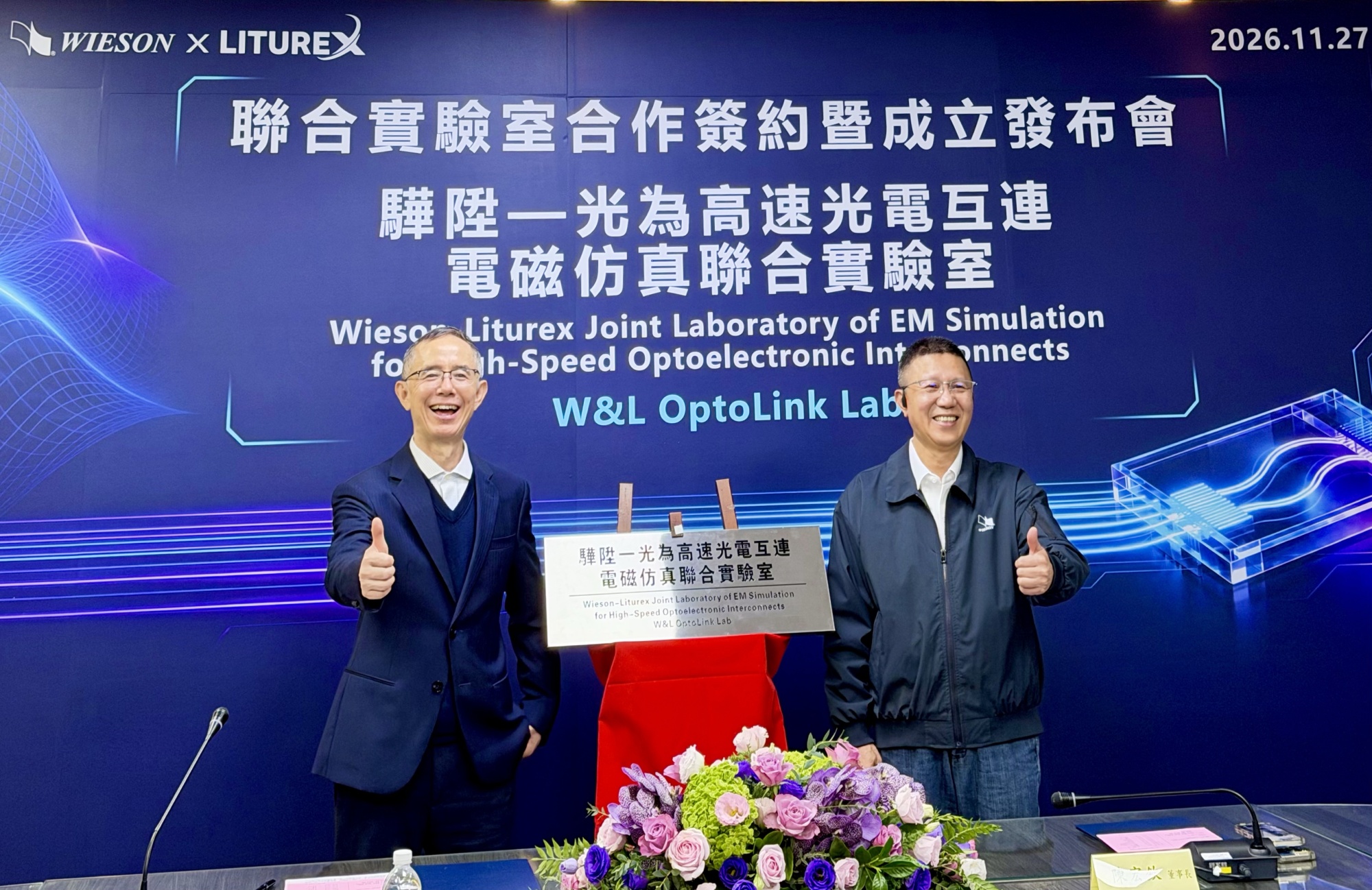
unveil the plaque for the W&L OptoLink Lab.
Technical Leadership: Dr. Yunpeng Song Appointed Chief Technical Expert
The joint laboratory is led by Liturex Founder Dr. Yunpeng Song (Canadian citizen) as Chief Technical Expert. Dr. Song holds a Ph.D. in Computational Electromagnetics from McMaster University in Canada and previously served as Principal Engineer and Chief Scientist at Finisar (now Coherent) in the United States, as well as Yungu Professor at Westlake University. His invented full-wave electromagnetic simulation S-parameter sensitivity algorithm is one of the core algorithms utilized in HFSS. Holding over 40 core U.S. patents and recognized as a key technical contributor to SFP100 optical transceivers, Dr. Song spearheads the architecture, design, and simulation methodologies for WIESON's high-speed optical transceivers.
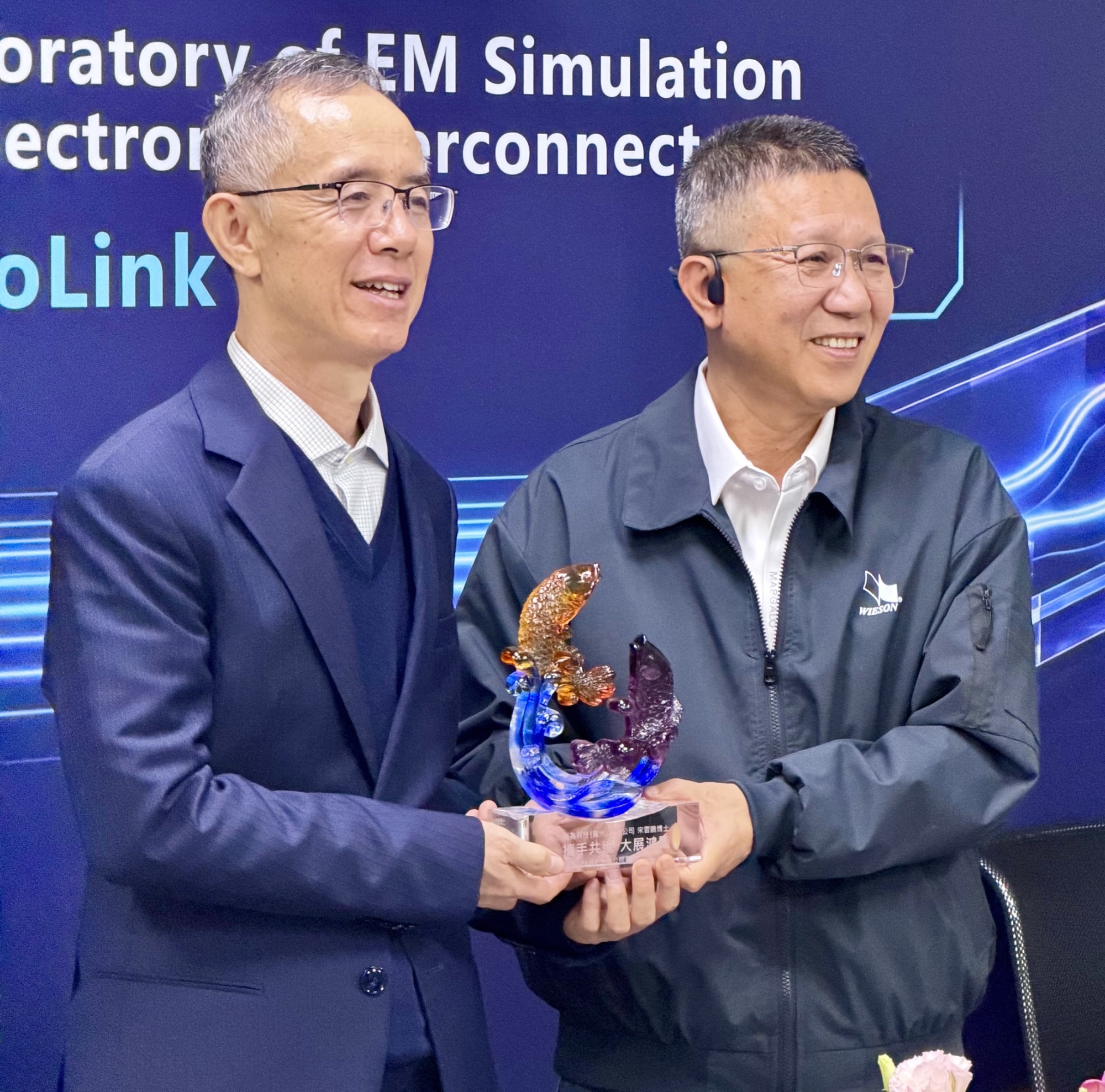
symbolizing mutual success in high-speed optoelectronic interconnects.
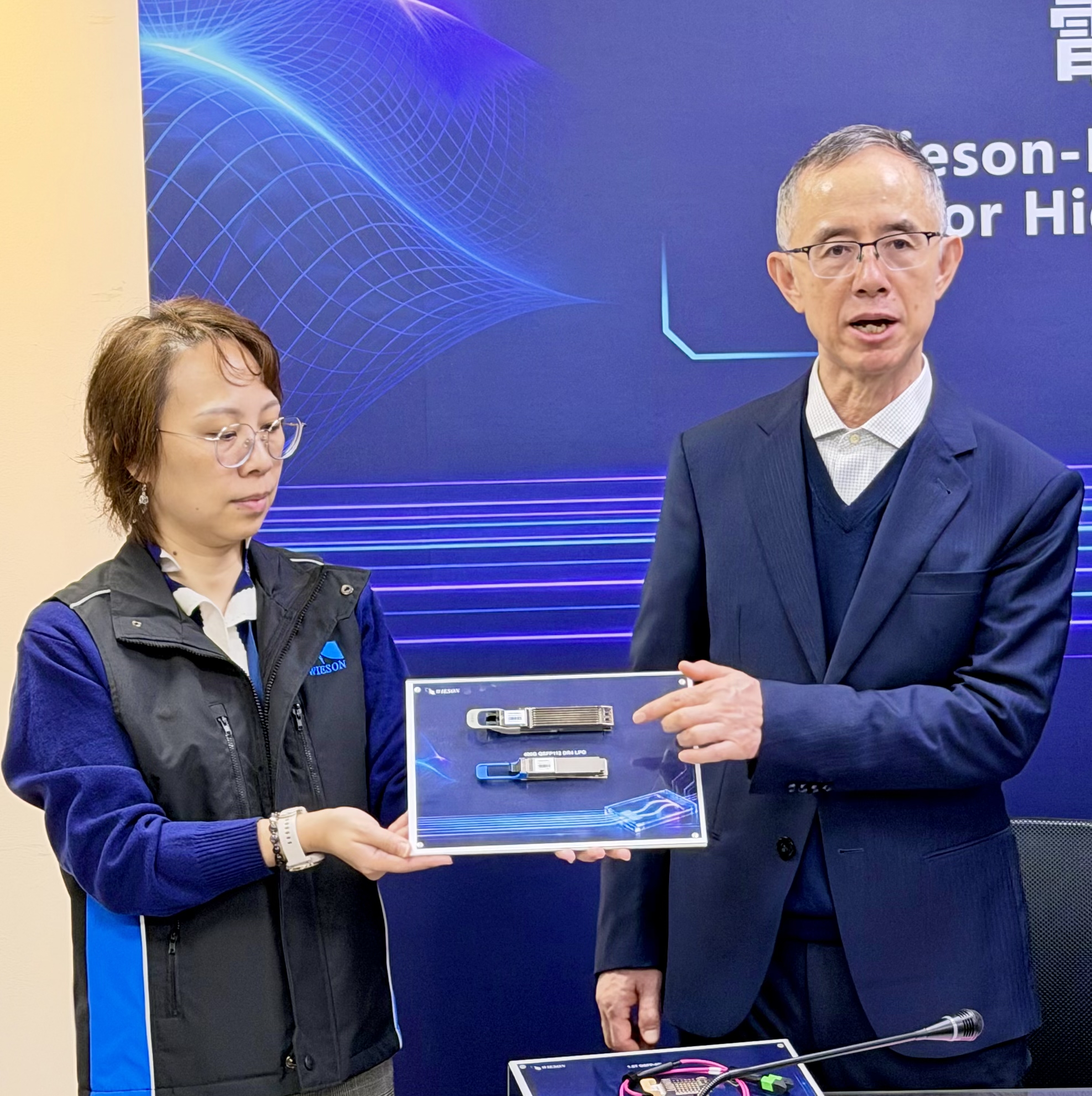
highlighting the co-developed optoelectronic interconnect architecture.
Product Progress: 1.6T in Mass Production, NPO Undergoing System-Level Validation
As global AI data centers enter large-scale deployment, the International Energy Agency (IEA) projects that global data center electricity consumption will nearly double by 2030 compared to 2025 levels. As compute clusters scale up, interconnect bandwidth—rather than compute power—has emerged as the new bottleneck, with transmission speeds advancing from 800G to 1.6T where signal attenuation and power consumption approach physical limits.
The co-developed, OCTC-compliant 1.6T optical transceivers have officially entered mass production and delivery. Near-Packaged Optics (NPO) represents the next phase of joint R&D, with performance already verified in laboratory environments and system-level validation currently underway. Meanwhile, 3.2T samples have been delivered, while 6.4T and Co-Packaged Optics (CPO) architectures are under evaluation. Initial commercial efforts focus on 800G/1.6T integrated solutions tailored for AI servers and hyperscale data centers. According to TrendForce, the global AI optical transceiver market is projected to reach approximately USD 26 billion in 2026.
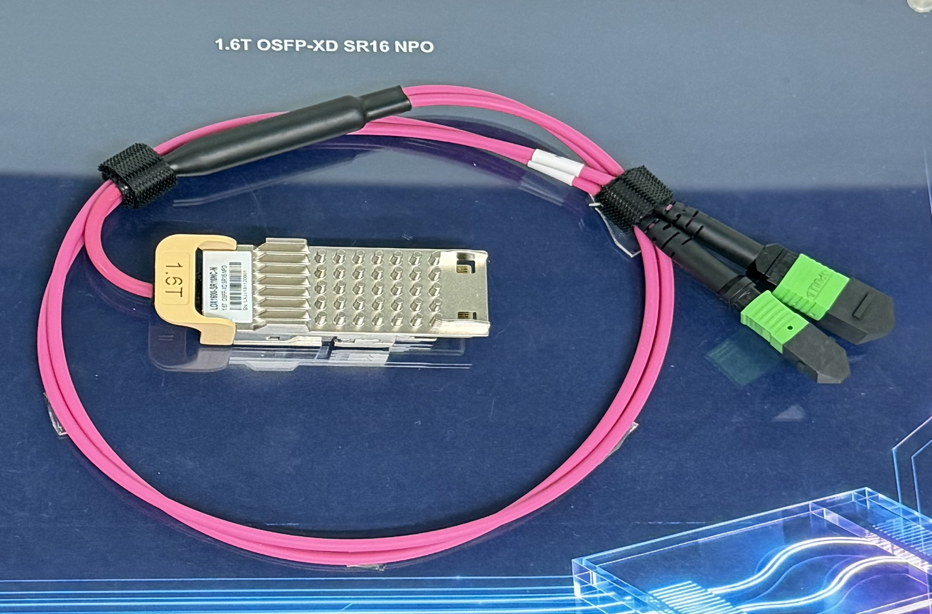
engineered for high-density optoelectronic interconnect applications.

meeting high-bandwidth interconnect demands for AI servers.
WIESON High-Speed Optoelectronic Interconnect Evolution & Product Roadmap
| Interconnect Architecture / Speed | Reach & Positioning | Technical Features & Serviceability | Current R&D & Production Status |
|---|---|---|---|
| Passive DAC (Direct Attach Copper) | ≤ 1.5 m (In-rack short reach) | No retimer, high-density connectors, mechanical + SI integration | Continuous investment & volume supply |
| 400G / 800G / 1.6T Optical Transceivers | 1.5 – 50 m (Front-panel pluggable) | OCTC-compliant, linear drive optics (DSP-free optical path) | 1.6T in mass production & delivery |
| NPO (Near-Packaged Optics) | 1.5 – 50 m (Near-ASIC placement) | Shortest board-level electrical path, pluggable NPO-Pro engine, field/board serviceable | Lab-verified; system-level validation underway |
| 3.2T / 6.4T & CPO (Co-Packaged Optics) | Next-gen ultra-high bandwidth & package integration | Single NPO-Pro mechanical form factor supporting 200G/lane (3.2T to 12.8T); CPO co-packaged on shared substrate | 3.2T sampled; 6.4T & CPO under evaluation |
Passive DAC
High-density connectors and passive copper cables combining mechanical and SI integration.
LPO Transceivers
DSP-free optical path with 1.6T transceivers currently in mass production and delivery.
NPO-Pro Platform
Near-ASIC placement with field serviceability; one mechanical envelope (22.58 mm, OSFP-XD/OSFP) scales via 200G electrical lanes.
True CPO
Optical engine co-packaged with the switch/GPU ASIC on a shared substrate for extreme lane rates.
Core Measurement & Simulation Capabilities of the Joint Laboratory
Equipped with 3D electromagnetic modeling, channel concatenation analysis, S-parameter measurement, eye diagram / Bit Error Rate (BER) validation, as well as PI, EMI, and thermal analysis capabilities, the laboratory welcomes customers for on-site verification:
3D EM Modeling
Builds 3D electromagnetic models of connectors, PCB traces, and optoelectronic packages to characterize high-frequency parasitics.
Channel Concatenation Analysis
Performs end-to-end high-speed channel simulations to evaluate system-level signal transmission integrity.
S-Parameter Measurement
Captures high-frequency S-parameter characteristics via precision test equipment for bidirectional correlation with EM models.
Eye Diagram / BER Validation
Conducts high-speed eye diagram and Bit Error Rate (BER) testing to verify link stability and margin.
PI / EMI Integrated Analysis
Covers Power Integrity (PI) and Electromagnetic Interference (EMI) evaluations to ensure system compatibility.
Thermal Analysis
Executes thermal simulations for high-speed optical modules and interconnects to ensure long-term operational reliability.
Dual-Track "Copper + Optical" Strategy & Overseas Manufacturing Footprint
"Successfully integrating optical engines into customer systems relies not on a single technology, but on end-to-end engineering integration from chip and package to interface and system—which is precisely where WIESON's 30 years of high-speed electrical interconnect and EM simulation expertise shines. Moving from copper to optical is not a pivot for WIESON; it is a natural extension of our three decades of high-speed interconnect mastery. Liturex converts signals into light, while WIESON ensures that light seamlessly enters and operates reliably within the system—enabling customers to obtain complete 'Copper + Optical' solutions from WIESON in one stop."
"In my role as Chief Technical Expert of the joint laboratory, I lead the technology roadmap, design reviews, and simulation methodology development. AI competition has reached a critical technological inflection point where interconnect systems determine the performance of AI infrastructure, requiring several times more connections than traditional architectures. Over the next five years, NPO will be far more practical to deploy than CPO, offering distinct advantages in power efficiency, cost-effectiveness, and thermal management—making it the optimal entry point today. With our complementary technologies, the roadmap from 1.6T to 6.4T will be progressively realized right here in this laboratory."
Advancing Next-Gen Interconnects Together: WIESON's Three Core Commitments
1. Adding Optics Without Reducing Copper
Existing copper interconnect solutions continue to be supplied and upgraded at an accelerated pace, offering the optimal mix based on link requirements.
2. One-Stop Service
Streamlined RFQ, sampling, and procurement in one place—collaborating with customers on selection, interface design, and system validation prior to platform freeze.
3. Data-Driven Reliability
Every transceiver module is verifiable and traceable, while 1.6T NPO further reduces power per port to maximize compute density within existing power budgets.
Looking ahead to future high-speed interconnect demands, WIESON is executing a dual-track "Copper + Optical" strategy. The company will continue investing in short-reach in-rack copper interconnects—including DAC, AEC, and board-level connectors—to deliver optimal solutions tailored to link conditions, while centering overseas production in Vietnam alongside specialized contract manufacturing in the Philippines and Malaysia to serve the North American market.